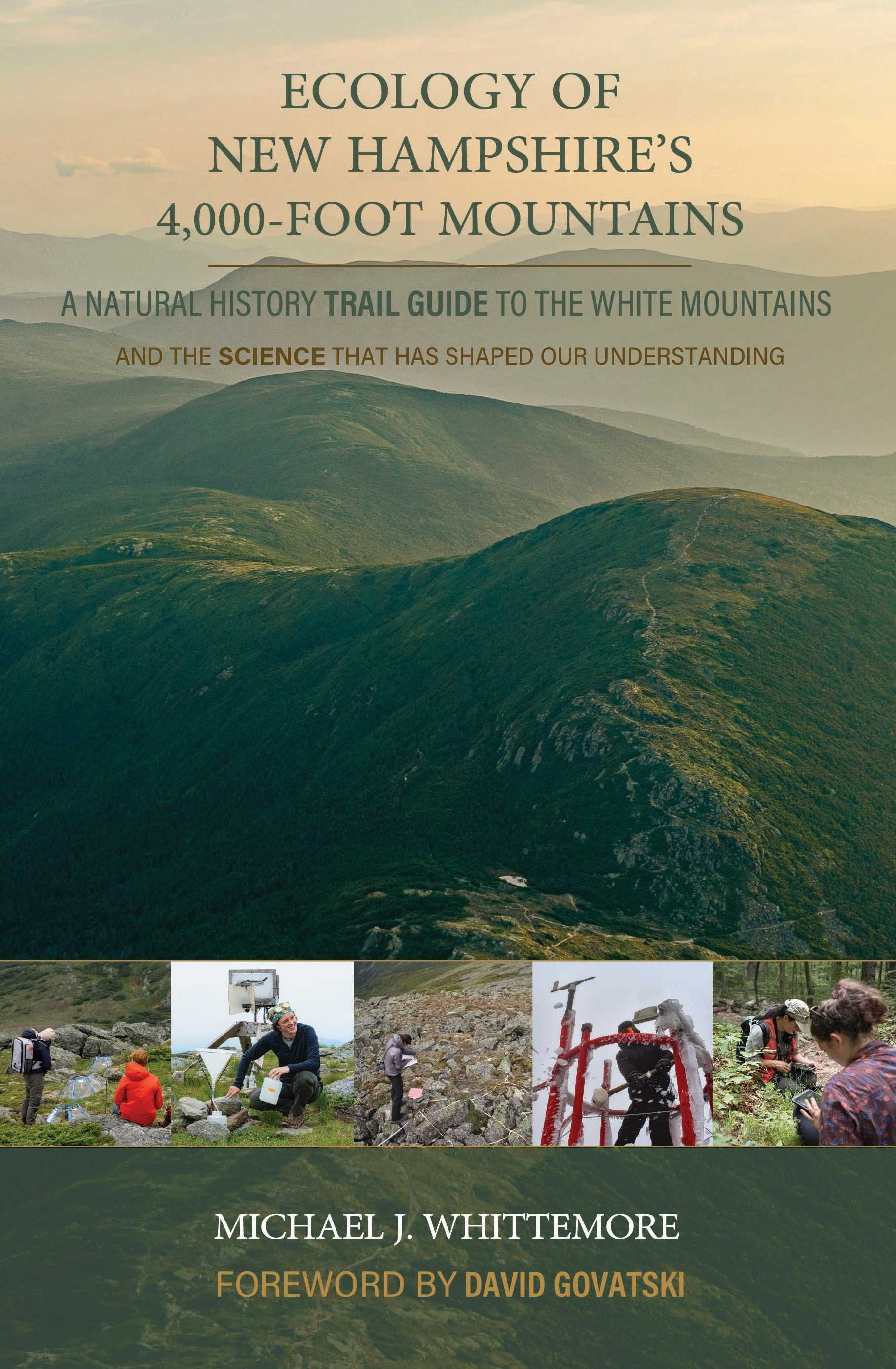
Ecology of New Hampshire’s 4,000-Foot Mountains is a new ecology and natural history guide organized around New Hampshire’s iconic 48 4,000-foot peaks. Written by ecologist and botanist Michael J. Whittemore, the project uses familiar trails and mountains as a framework for exploring the geology, climate, forests, alpine ecosystems, wildlife, plant communities, disturbance, and conservation history of the White Mountains.
Rather than treating the 48 simply as summits to climb, the book looks at how ecological patterns change from valley floors to exposed alpine summits. Individual range and mountain profiles combine ecological interpretation with trail and habitat maps, characteristic species, conservation-significant plants, and carefully screened observation data. Nearly twenty Ecology in Action features also introduce readers to long-term research conducted throughout the White Mountains, connecting decades of scientific work with the landscapes hikers experience today.
The project has been shaped by an extensive collaborative review process involving scientists and subject-matter experts in geology, botany, alpine ecology, ornithology, forest science, wildlife ecology, freshwater ecology, climate, and conservation. Contributors include researchers and professionals affiliated with organizations such as the USDA Forest Service, Appalachian Mountain Club, New Hampshire Natural Heritage Bureau, Vermont Center for Ecostudies, Hubbard Brook, and academic institutions across the Northeast.
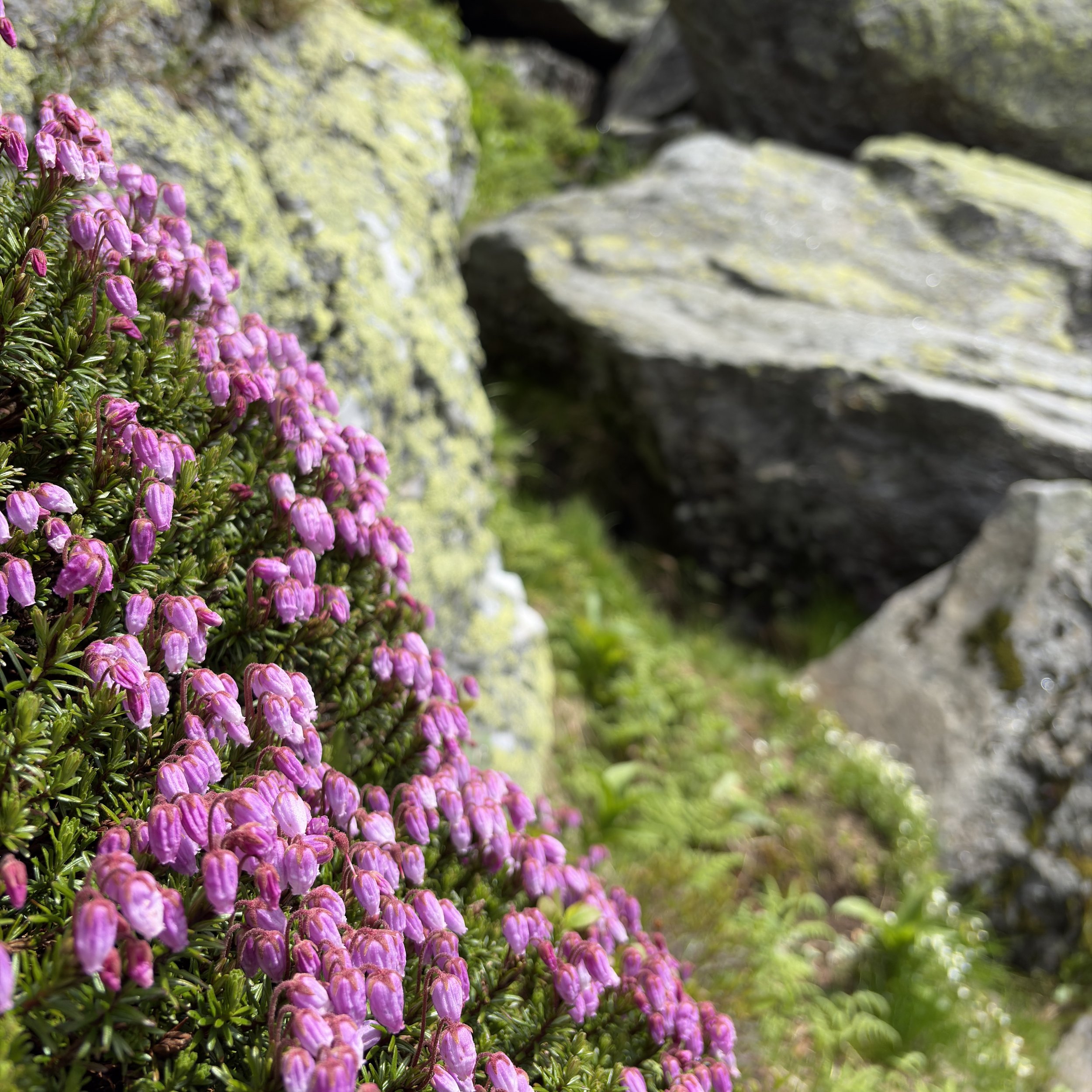
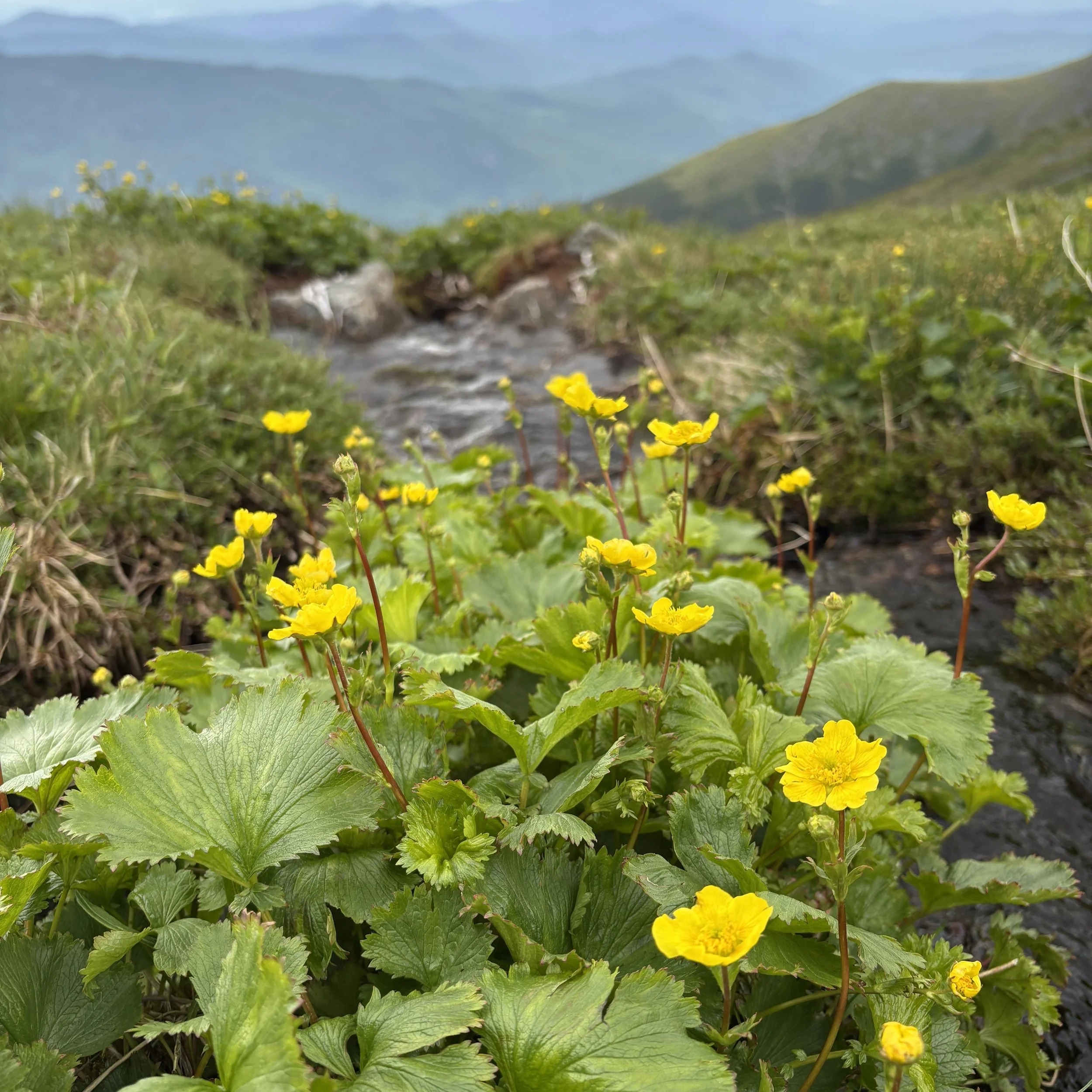
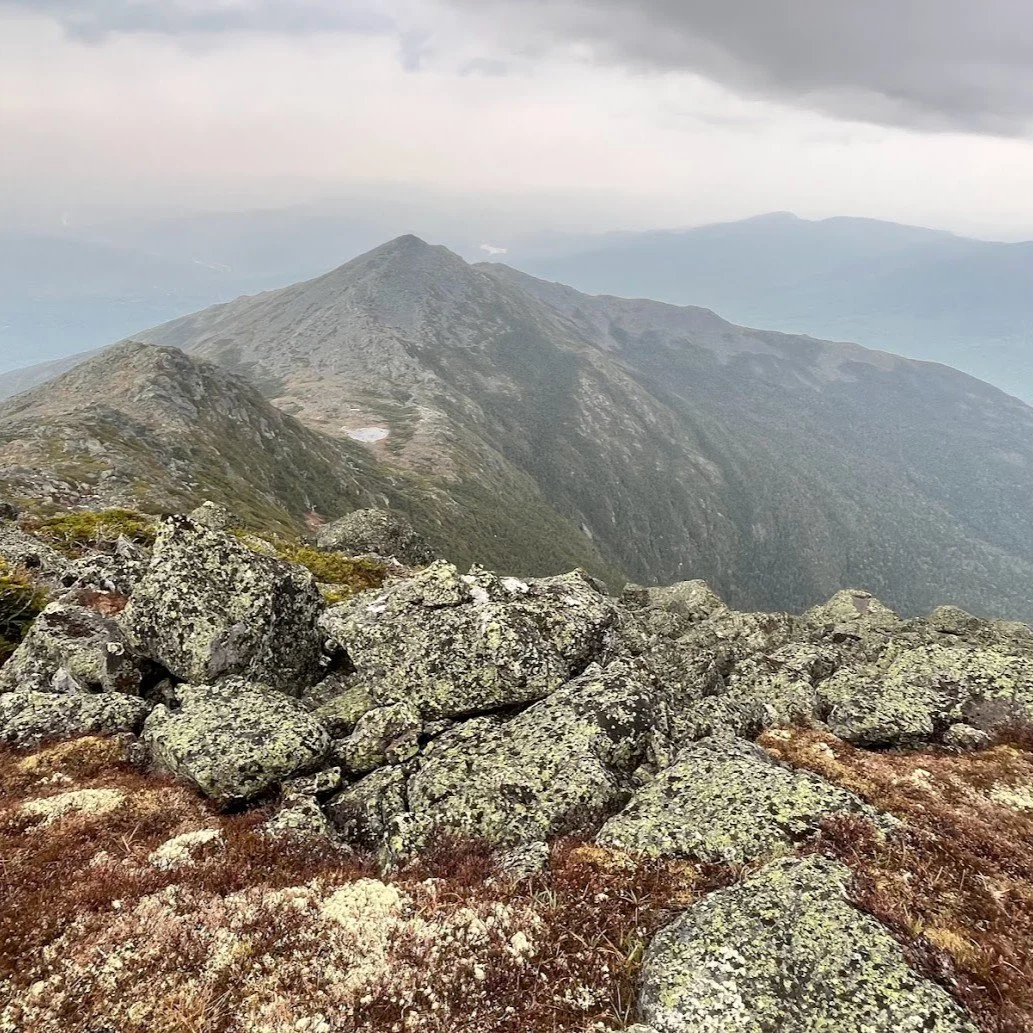
The book also represents a major community photography effort, incorporating nearly 400 photographs from more than 200 photographers, naturalists, researchers, hikers, and citizen scientists. Together, their images document the plants, wildlife, forests, geology, research, and mountain landscapes that make the White Mountains distinctive.
The foreword was written by longtime New Hampshire conservationist and naturalist David Govatski.
What Early Readers Are Saying
White Mountains author Steven D. Smith, author of The 4000-Footers of the White Mountains and co-editor of the AMC White Mountain Guide, describes the project as “a landmark book” and an essential companion for understanding the region.
J. Dykstra “Dyk” Eusden Jr., PhD, Professor Emeritus of Earth and Climate Sciences at Bates College and co-author of The Geology of New Hampshire’s White Mountains, calls the book a “must-have” for readers ranging from casual hikers to field scientists.
Geologist and professional mountain ultrarunner Katie Schide, PhD emphasizes the book’s focus on the natural history and ecological details behind the familiar White Mountain landscape, while Jordon C. Tourville, PhD, Staff Scientist–Terrestrial Ecology with the Appalachian Mountain Club, highlights its value in connecting readers with both mountain ecology and the scientists studying environmental change in the region.
About the Project
The goal of the project is simple: to help people see more when they are in the mountains. A trail passes through layers of geological history, changing forests, watersheds, wildlife habitat, rare plant communities, disturbance, and ongoing ecological research. By bringing those stories together in one place, Ecology of New Hampshire’s 4,000-Foot Mountains is intended to deepen the connection between people and one of the Northeast’s most remarkable mountain landscapes.
Publication: November 1, 2026
The book will be available for purchase on November 1, 2026. To subscribe to the book launch, click here.